Getting your business onto Google is only the beginning.
Understanding Boise local search intent helps service businesses create pages and content around what potential customers actually want when they search.
Someone searching “pest control” may be researching. Someone searching “pest control company Boise” is showing stronger local intent.
That difference matters.
The goal isn’t more traffic. It’s attracting searches with a realistic path to revenue.
What Is Local Search Intent?
Search intent describes what someone wants to accomplish with a Google search.
For local service businesses, that intent often falls into several categories.
Informational Intent
The customer wants an answer.
Examples include:
- How often should a lawn be treated?
- What causes ants inside a house?
- How does dog boarding work?
- When should a pool be winterized?
These searches can support educational SEO content.
Service Intent
The customer is looking for a particular solution.
For example:
- Lawn fertilization services
- Residential pest control
- Dog boarding services
- Pool cleaning company
These searches belong closer to your core service pages.
Local Transactional Intent
The searcher needs a service within a particular market.
Examples might include:
- Lawn care company in Boise
- Pest control Meridian Idaho
- Dog boarding near Boise
- Pool service in Eagle
These searches can be especially important for service businesses because location is part of the customer’s decision.
Why Boise Local Search Intent Matters for SEO
Legacy Engine specifically builds “Service + City” landing pages to create opportunities for high-intent local searches. It also publishes weekly content based on search intent.
Those services complement each other.
A website can use landing pages to target commercial searches while blog content addresses questions customers ask before hiring.
Think of the structure like this:
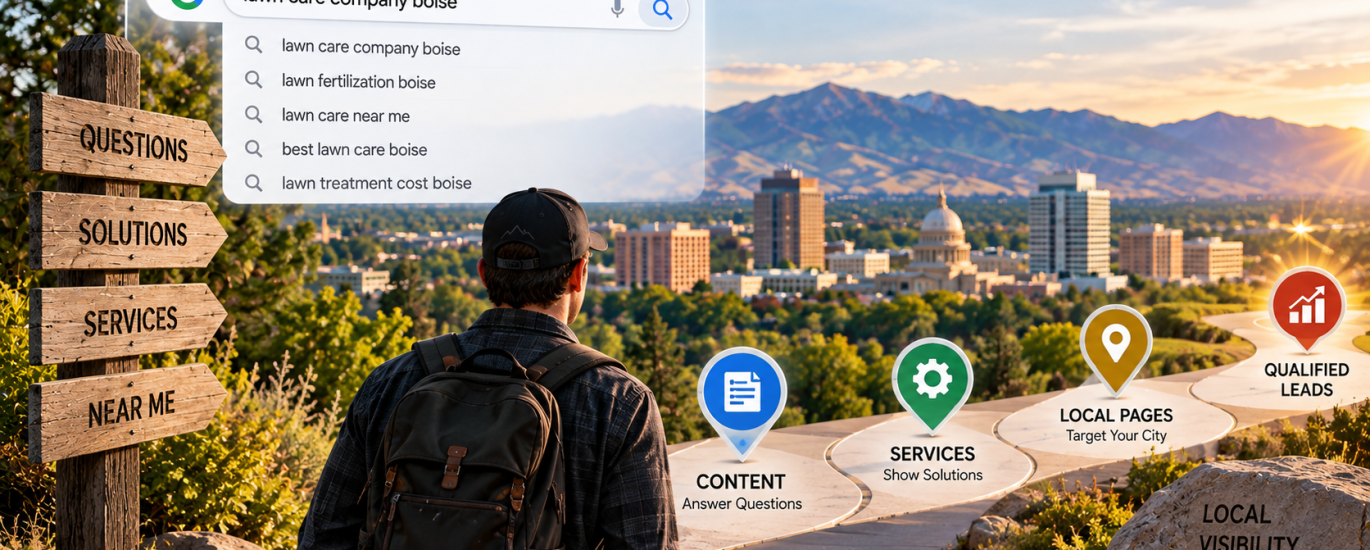
Customer Question → Helpful Content → Relevant Service → Local Landing Page → Conversion
Instead of publishing disconnected articles, every piece has a job.
Match the Right Page to the Right Search
One of the biggest mistakes in Local SEO is trying to make every page rank for everything.
A blog shouldn’t necessarily replace a service page.
Likewise, a generic service page may not adequately address every local market.
Instead, determine what type of page best satisfies the search.
Use Service Pages for Core Services
Your primary services need clear, authoritative pages explaining what you provide.
Use Local Landing Pages for Geographic Intent
If you legitimately serve multiple markets, carefully built local landing pages can connect individual services with those locations.
Legacy Engine’s framework specifically uses Service + City pages across a client’s market.
Use Blog Content for Questions and Supporting Topics
Blogs can answer questions that occur before someone contacts your company.
They can also create natural pathways toward your commercial pages.
Different searches need different destinations.
Build Content Around the Customer Journey
Search behavior can change as someone gets closer to making a decision.
A homeowner might begin with:
“Why do I have ants in my kitchen?”
Later, that search could become:
“How much does ant control cost?”
Eventually:
“Pest control company Boise.”
Those searches represent different stages of the same potential customer journey.
Your SEO strategy should account for them.
Don’t Chase Traffic That Has No Business Value
A keyword can generate search volume without generating useful leads.
For a Boise service business, 5,000 visitors from irrelevant national searches may be less valuable than 100 visitors actively looking for your service locally.
Ask:
- Does this query relate to a service we sell?
- Is the searcher inside our market?
- What problem are they trying to solve?
- What page should satisfy that search?
- What should the visitor do afterward?
This keeps SEO focused on business outcomes rather than vanity metrics.
Use Boise Search Intent to Plan Weekly SEO Content
Legacy Engine offers weekly SEO content publishing, with each article crafted around search intent to create additional ranking potential and strengthen domain authority.
That means content planning shouldn’t start with:
“What should we write about this week?”
Start with:
“What are our potential customers searching for that our website doesn’t adequately answer?”
Then prioritize topics based on relevance.
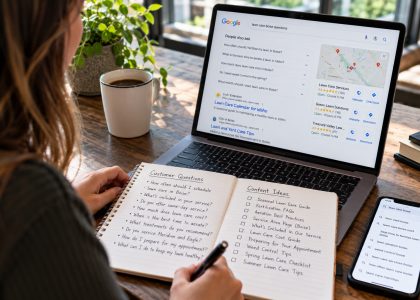
For example, content opportunities can come from:
- Customer questions
- Service-specific problems
- Seasonal needs
- Local considerations
- Buying concerns
- Comparisons
- Preparation questions
- Maintenance questions
Now publishing becomes systematic instead of random.
Connect Informational Content to Revenue Pages
A useful blog shouldn’t leave readers at a dead end.
Suppose a lawn care company publishes an article answering a common lawn problem.
The article can naturally direct readers toward the relevant service.
That service page can then connect to appropriate local landing pages.
The structure becomes:
Blog → Service → Location → Conversion
Internal links help customers move through that structure while showing search engines how related pages connect.
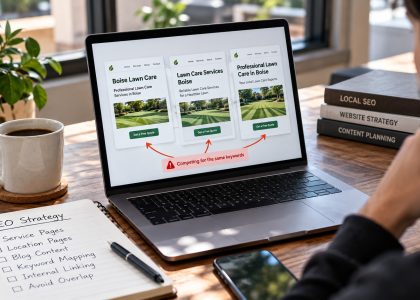
Avoid Creating Multiple Pages for the Same Intent
More content isn’t automatically better.
If five articles essentially answer the same search, they may compete rather than strengthen the site.
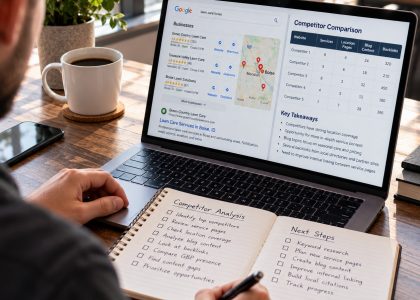
Before publishing, review your existing pages.
Ask whether the new topic:
- Answers a genuinely different question
- Targets another stage of the customer journey
- Supports a different service
- Serves a meaningful geographic need
- Expands an existing content cluster
If an existing article already satisfies the intent, improving that page may make more sense.
Search Intent Should Influence Google Business Profile Strategy Too
Your website isn’t the only part of Local SEO.
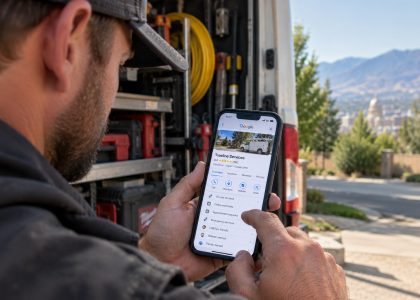
Legacy Engine also optimizes Google Business Profiles for the Map Pack, including categories, services, photos, review generation, keywords, and posting strategy.
Those elements should reflect what the business actually offers.
For example, your:
Google Business Profile → Website → Service Pages → Local Pages → SEO Content
should reinforce the same core services and markets.
That creates a more coherent local search presence.
Support High-Intent Pages With Local Authority
Creating the right page doesn’t automatically make it authoritative.
Legacy Engine also builds white-hat citations and backlinks designed to create stronger trust signals.
This creates another layer of the system:
Search Intent + Relevant Pages + Local Signals + Authority + Conversion Path
SEO becomes stronger when these pieces work together rather than operating independently.
Measure Leads, Not Just Keyword Rankings
Ranking improvement is useful.
However, a high-intent SEO strategy should ultimately create business opportunities.
Monitor whether organic visitors:
- Call the business
- Request estimates
- Submit forms
- Visit important service pages
- Engage with location pages
- Become qualified leads
A keyword ranking isn’t the finish line.
The real question is whether visibility is producing opportunities your business can convert.
How Legacy Engine Builds Around Search Intent
Legacy Engine’s current Local SEO offering brings several connected components together:
- Google Business Profile Optimization
- Local Landing Page Framework
- Link Building & Citations
- Weekly SEO Content Publishing
Its landing pages specifically target high-intent local searches, while weekly blogs are developed around search intent.
That makes search intent more than a blogging tactic.
It’s part of the architecture behind the entire Local SEO system.
Learn more About Legacy Engine and its Local SEO services for service-based businesses.
Stop Publishing Content Without a Destination
Every SEO page should have a purpose.
Know the search you’re targeting.
Understand what the customer needs.
Choose the right type of page.
Then create a logical path toward the service that solves their problem.
Traffic is useful. Intent is what gives that traffic direction.
Ready to build a Local SEO system around the searches that matter to your business? Contact Us for a visibility roadmap.
Frequently Asked Questions
What is Boise local search intent?
Boise local search intent describes what someone wants when performing a Boise-focused search, such as finding information, comparing services, or hiring a local provider.
Why does search intent matter for Local SEO?
Search intent helps businesses match the correct website page with what customers actually want, creating a more relevant search experience.
Should every local keyword have its own page?
No. Pages should satisfy distinct and useful search intents. Creating multiple pages for nearly identical searches can result in unnecessary content overlap.
How do local landing pages support search intent?
Local landing pages can connect specific services with geographic searches when businesses genuinely serve those locations.
Can blog content generate local leads?
Yes. Helpful content can attract customers researching service-related problems and guide them toward relevant service or location pages.