Your competitors are already competing for attention in local search results.
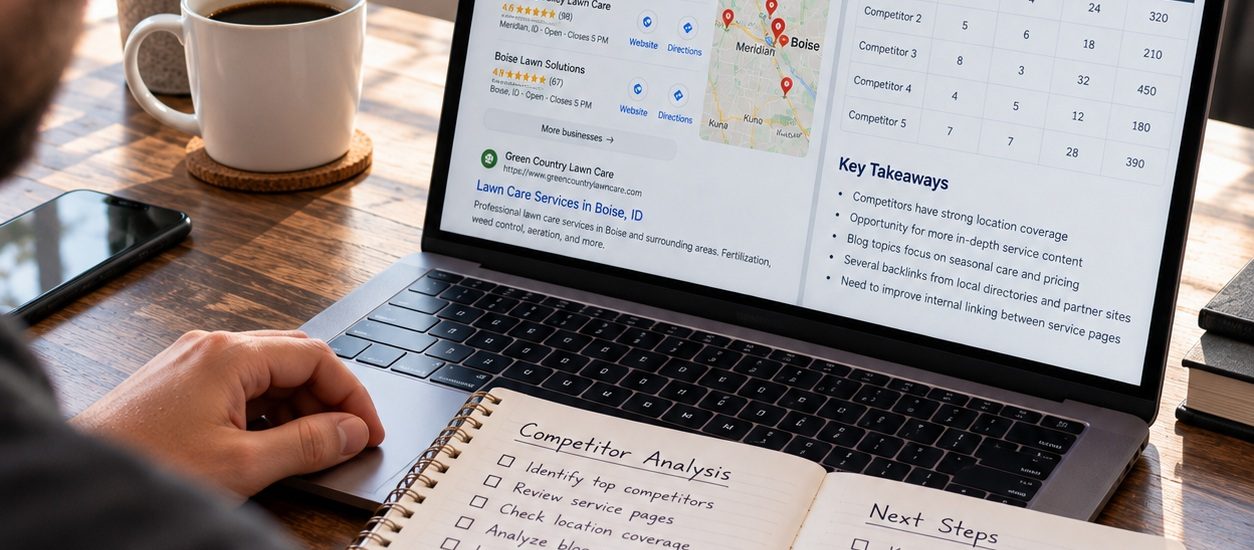
Boise local SEO competitor analysis helps service businesses understand which companies appear for relevant searches, how their websites are structured, and where opportunities may exist.
For Boise business owners, this research provides direction before investing in more website pages, content, or local SEO improvements.
The goal is not to copy competitors. It is to understand the market and build a stronger strategy.
What Is Local SEO Competitor Analysis?
Local SEO competitor analysis is the process of reviewing businesses that compete for visibility in relevant geographic searches.
It can involve examining:
- Organic search results
- Local service pages
- Location-specific landing pages
- Website content
- Internal linking
- Backlinks and business citations
- Google Business Profile information
This research helps reveal how other businesses present their services online.
However, visible search results alone do not explain every factor influencing rankings.
Competitor research provides useful evidence, not a guaranteed ranking formula.
Why Boise Local SEO Competitor Analysis Matters
Boise service businesses often compete across several nearby communities.
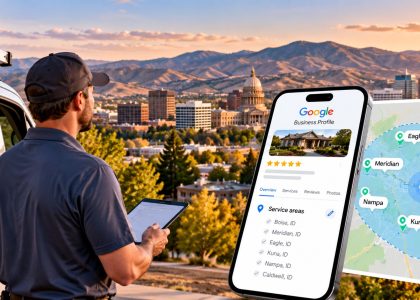
Depending on their actual service coverage, these may include Meridian, Eagle, Kuna, and Garden City.
A business may perform well for one service in Boise but have limited visibility for another.
Competitor analysis can help identify these differences.
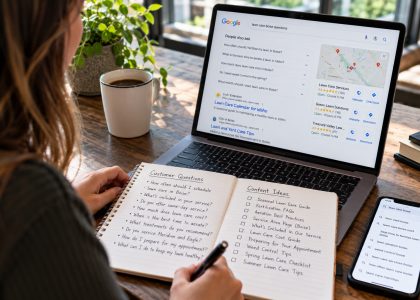
Understand Who Competes With You Online
Your biggest offline competitor is not always your strongest search competitor.
For example, a pest control company may compete against:
- Established local service providers
- Regional companies
- National franchises
- Specialized pest control businesses
- Local companies with highly focused service pages
The companies appearing in search results may vary by keyword and location.
Therefore, research should begin with the searches your potential customers actually make.
Identify Your Real Local Search Competitors
Start with your most important services.
A Boise lawn care business might research searches related to lawn maintenance, fertilization, or seasonal treatments.
Review which businesses appear for those searches.
Then repeat the process for relevant service locations.
Look Beyond One Keyword
One search result cannot represent an entire market.
Instead, compare several combinations of services and locations.
For example:
- Lawn care in Boise
- Lawn fertilization in Boise
- Lawn maintenance in Meridian
- Lawn treatment services in Eagle
These are illustrative searches, not verified keyword recommendations.
Keyword research should determine which terms are relevant and worth targeting.
Study How Competitors Organize Their Service Pages
A competitor’s website structure can reveal how it explains different services.
Look at whether competing businesses have:
- Dedicated pages for major services
- Clear descriptions of each service
- Useful answers to customer questions
- Relevant service area information
- Logical internal links
- Easy-to-find contact options
For example, a pest control business may have separate pages for general pest control, rodent control, and other services it provides.
That structure can help customers find more specific information.
However, separate pages are not always necessary.
Create pages when they provide distinct value, not simply because competitors have them.
Evaluate Local Landing Page Coverage
Local landing pages can help service businesses explain their availability in different markets.
Competitor research may reveal that some businesses have useful location-specific information while others rely on generic pages.
Review how competing websites communicate:
- Which locations they serve
- Which services are available in each market
- What customers can expect
- How to request service
- Whether the information is genuinely location-specific
Avoid Copying Competitor Location Pages
Publishing nearly identical pages for multiple cities can create a poor customer experience.
Instead, each location page should provide useful information about real service coverage.
For example, a business serving Boise and Meridian should clearly explain its availability in both locations.
Do not create pages for cities your business does not actually serve.
Compare Website Content Quality
Competitor analysis should examine more than page counts.
A website with many articles is not automatically more useful than one with fewer, stronger resources.
Look at whether competitors answer important customer questions.
Consider:
- Are service explanations clear?
- Is the information current?
- Does the content address practical concerns?
- Are articles connected to relevant services?
- Is the writing useful for local customers?
These observations can guide your own publishing priorities.
Find Opportunities to Provide Better Answers
Suppose competing lawn care websites briefly mention seasonal lawn preparation.
Your business may have the expertise to explain the topic more clearly.
A useful article could address preparation steps, timing considerations, and when professional help may be appropriate.
The opportunity is to provide better information, not rewrite another company’s article.
Review Competitor Backlinks and Local Citations
Links from relevant websites can help search engines discover content and understand relationships between websites.
Competitor research can reveal potential sources of local visibility.
These might include:
- Local business organizations
- Industry associations
- Relevant community publications
- Business directories
- Local partnership websites
However, not every link pointing to a competitor is worth pursuing.
Focus on Relevance and Legitimacy
A link should make sense for your business and audience.
For example, membership in a legitimate local business organization may provide a relevant business listing.
Buying large quantities of low-quality links is not a sustainable substitute for meaningful relationships.
Likewise, business citations should contain accurate company information.
The objective is a credible local presence, not the largest possible collection of links.
Examine Internal Linking Opportunities
Internal links help customers navigate between related pages.
They also help search engines discover and understand website content.
During competitor research, review how businesses connect:
- Blog articles to service pages
- Service pages to related services
- Location pages to relevant information
- Educational content to contact options
Then review your own website.
A helpful article should make it easy for readers to find the service being discussed.
However, links should always fit the surrounding content.
Don’t Assume Every Competitor Tactic Works
A competing website may rank well despite weaknesses in its content or structure.
That does not mean those weaknesses caused its success.
Search rankings depend on many factors, including relevance, competition, location, and other signals.
Therefore, avoid copying tactics without understanding their purpose.
Ask three questions:
- Does this approach help our customers?
- Does it support a service we actually provide?
- Can we implement it accurately and sustainably?
If the answer is no, the tactic may not belong in your strategy.
Build a Simple Boise Local SEO Competitor Analysis Process
Competitor research becomes more useful when it follows a repeatable process.
Step 1: Choose Your Priority Services
Identify the services most important to your business.
Step 2: Select Relevant Search Markets
Focus on Boise and other locations your business genuinely serves.
Step 3: Identify Search Competitors
Review the businesses appearing for relevant service and location searches.
Step 4: Compare Important Website Elements
Examine service pages, location pages, content, links, and customer contact paths.
Step 5: Record Opportunities
Document where your website could provide clearer or more complete information.
Step 6: Prioritize Improvements
Focus on changes that support customer needs and business goals.
Step 7: Monitor Results
Review search visibility, website activity, and qualified inquiries over time.
This process turns competitor research into an actionable SEO workflow.
Measure Progress Against Your Own Business Goals
Competitor rankings can provide context, but they should not be your only performance measure.
A Boise service business should also monitor:
- Visibility for relevant searches
- Organic website traffic
- Visits to important service pages
- Qualified contact form submissions
- Phone inquiries
- Booked appointments
- Revenue from new customers
Not every improvement will produce immediate results.
Local SEO requires ongoing evaluation.
The goal is not simply to outrank another business. It is to attract customers who need your services.
How Legacy Engine Supports Competitive Local SEO
Legacy Engine helps service-based businesses build structured local search systems.
Its services support several areas identified through competitor research.
Local Landing Page Framework
Useful service and location pages help businesses communicate what they offer and where they operate.
Link Building & Citations
Relevant links and accurate business listings support a consistent local presence.
Weekly SEO Content Publishing
Ongoing content development helps businesses answer relevant customer questions and expand useful website resources.
Google Business Profile Optimization
Accurate business profile information supports a company’s presence across Google Search and Maps.
Together, these services help businesses build a more organized Local SEO strategy.
Competitor research can help determine where improvements should be prioritized.
Build a Local SEO Strategy That Fits Your Business
Competitor analysis should provide direction, not distractions.
For Boise service businesses, understanding the local search landscape can reveal opportunities to improve website structure, content, and business information.
However, copying competitors is not a long-term strategy.
A stronger approach is to understand what customers need, evaluate your current website, and improve the areas that matter most.
Research the competition. Build around your customers. Measure the business results.
Learn more About Legacy Engine and its Local SEO services for service-based businesses.
Ready to develop a more structured local search presence? Contact Us to discuss your business.
Frequently Asked Questions
What is Boise local SEO competitor analysis?
Boise local SEO competitor analysis involves reviewing businesses that compete for relevant local searches. It helps identify opportunities involving service pages, content, location coverage, and links.
Why should Boise service businesses research SEO competitors?
Competitor research helps businesses understand the local search landscape, identify useful website improvements, and prioritize SEO activities.
Should I copy my competitors’ SEO strategies?
No. Competitor research should provide insights, not content or tactics to copy. Your website should reflect your actual services, locations, and customer needs.
How often should I review local SEO competitors?
A quarterly review is a reasonable starting point for many businesses. More frequent reviews may be useful when entering new markets or launching services.
Can competitor analysis guarantee better Google rankings?
No. Competitor analysis can inform SEO decisions, but it cannot guarantee rankings. Search visibility depends on multiple factors and ongoing competition.