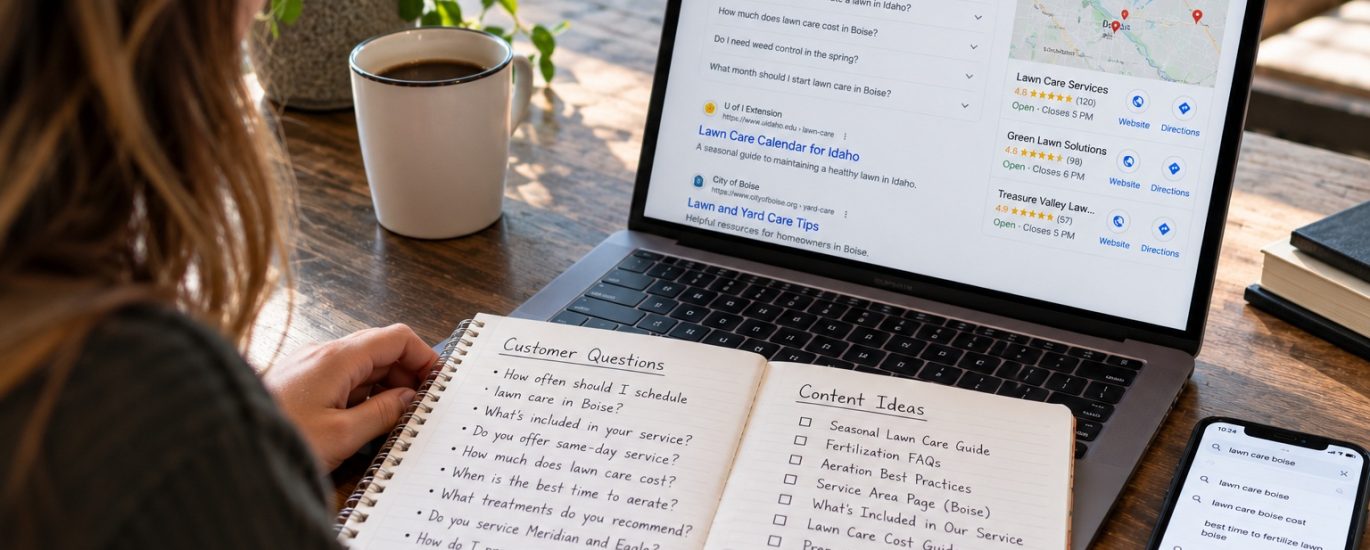
Every customer question is an opportunity to create useful website content.
A Boise customer question SEO strategy helps service businesses turn real customer concerns into informative articles, service page improvements, and relevant search content.
For Boise business owners, this creates a practical way to publish content based on what customers actually want to know.
Instead of guessing what to write, start with the questions your customers already ask.
Why Customer Questions Matter for Local SEO
Customers often search Google before contacting a service business.
They want to understand their options, compare providers, and solve specific problems.
For example, someone looking for pest control may search for information about seasonal pest activity.
A homeowner considering lawn care may want to understand when certain treatments are appropriate.
These questions create opportunities for helpful content.
The goal is to answer real customer needs, not publish articles simply to fill a calendar.
Build a Boise Customer Question SEO Strategy Around Real Conversations
Your team already receives valuable information through everyday customer interactions.
Questions may come from:
- Phone calls
- Website contact forms
- Customer emails
- Service appointments
- Sales conversations
- Customer support requests
- Online reviews
These conversations can reveal what customers need to understand before choosing a service.
Start With Frequently Asked Questions
Ask your team which questions appear most often.
For example:
- How does this service work?
- When should I schedule an appointment?
- How long does the process take?
- What should I do before the technician arrives?
- Which areas does the business serve?
- What affects the cost?
Record the questions using the language customers actually use.
That language can provide a useful starting point for SEO content research.
Not Every Customer Question Needs a Separate Blog
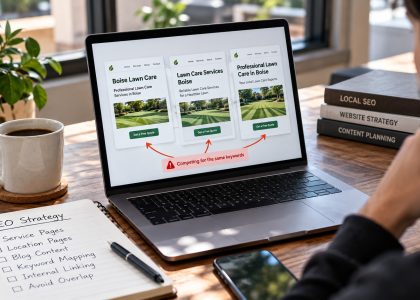
A common content mistake is creating a new article for every question.
That can lead to repetitive pages with little additional value.
Instead, decide where each answer belongs.
| Customer question | Recommended content |
|---|---|
| What does the service include? | Service page |
| How do I prepare for an appointment? | Helpful blog article |
| Do you serve Meridian? | Service area information |
| What affects service pricing? | Pricing explanation or FAQ |
| When should I schedule seasonal service? | Educational blog article |
Choose the format that helps the customer most.
Useful content organization matters more than publishing volume alone.
Group Related Questions Into Stronger Topics
Several customer questions may belong in one comprehensive article.
For example, a Boise lawn care business might receive questions about seasonal lawn preparation.
Instead of publishing five short articles, it could create one detailed guide covering:
- When to prepare the lawn
- Common seasonal concerns
- What homeowners can do themselves
- When professional service may help
- How to schedule an appointment
This approach can produce a more complete resource.
It also makes the website easier to navigate.
Match Content With Customer Search Intent
A customer asking how something works may not be ready to book immediately.
Another customer searching for a specific service in Boise may be ready to contact a provider.
These searches represent different needs.
Informational Questions
These customers want explanations, guidance, or general information.
Educational blog content can help answer their questions.
Service-Focused Questions
These customers want to understand what a company offers.
Clear service pages are often more appropriate.
Location-Focused Questions
These customers want to know whether a business operates in their area.
Accurate service area information and useful local landing pages can help.
Understanding these differences makes your content more relevant.
Use Local Context Where It Adds Value
Boise-focused content should provide meaningful local information.
However, adding the word “Boise” repeatedly does not automatically make an article useful.
Local relevance should come from genuine customer needs.
For example, a seasonal service article may discuss relevant weather conditions, local service considerations, or common scheduling patterns.
Only include details that are accurate and relevant to the service.
Avoid creating nearly identical articles for every neighboring city.
Local SEO content should reflect real service markets and real customer questions.
Turn Customer Questions Into a Weekly Publishing Process
Legacy Engine emphasizes structured, repeatable Local SEO work.
A customer-question workflow fits that approach.
Step 1: Collect Questions
Create one shared location where your team records customer questions.
Step 2: Identify Repeated Themes
Look for questions that appear frequently or reveal important customer concerns.
Step 3: Research Search Demand
Use keyword research to determine how people search for those topics.
Customer conversations provide ideas, but they do not automatically prove search volume.
Step 4: Select the Best Content Format
Choose whether the answer belongs in a blog, service page, FAQ, or existing resource.
Step 5: Publish Useful Content
Write a clear answer based on accurate information and your company’s actual services.
Step 6: Review Performance
Monitor relevant search visibility, website engagement, and customer inquiries.
Use those findings to guide future improvements.
Make Your Content More Useful Than a Generic Answer
Customers can find basic explanations in many places.
Your business can add value by sharing practical experience.
For example, useful content might explain:
- Common problems customers encounter
- How your service process works
- What customers should expect
- When professional assistance is appropriate
- How to prepare for a scheduled service
Keep information accurate and avoid unsupported claims.
Specific, useful explanations are more valuable than generic marketing language.
Connect Educational Content With Your Services
Educational articles should help customers understand their problems.
When relevant, they can also guide readers toward the appropriate service.
For example, an article about preparing for a pest control appointment may naturally link to the company’s pest control service page.
That connection helps readers move from learning to taking action.
However, not every paragraph needs a sales message.
Use contextual internal links where they genuinely help the reader.
Keep Existing Content in Mind
Before publishing a new article, review what already exists on your website.
You may discover that an existing page already answers the question.
In that case, improving the existing content may be more useful than publishing another article.
Ask:
- Is this question already answered?
- Is the information current?
- Does the existing page provide enough detail?
- Would a new article add meaningful value?
- Could the answer strengthen an existing service page?
This helps prevent unnecessary duplication.
Measure More Than Blog Traffic
Publishing content is only part of the process.
Business owners should also consider whether the content supports useful customer actions.
Relevant measures may include:
- Organic search impressions
- Search clicks
- Visits to important service pages
- Contact form submissions
- Qualified inquiries
- Booked appointments
Not every informational article will produce immediate leads.
Some articles help customers understand a service before they are ready to contact a business.
Evaluate performance based on the content’s purpose.
How Legacy Engine Supports a Structured SEO Content Strategy
Legacy Engine helps service-based businesses build a connected Local SEO presence.
Its services include:
- Weekly SEO Content Publishing to develop useful search-focused website content.
- Local Landing Page Framework to support relevant service and geographic searches.
- Link Building & Citations to strengthen the broader local presence.
- Google Business Profile Optimization to maintain accurate business information.
Customer questions can inform the content publishing process.
However, effective SEO content also requires research, organization, and ongoing evaluation.
The goal is to build a system that consistently answers relevant searches and supports qualified customer opportunities.
Build Your Next Content Plan Around Real Customer Needs
Your next blog topic may already be waiting in your inbox or call history.
Look at the questions customers ask before booking.
Identify the concerns that appear repeatedly.
Then create content that answers those questions clearly.
For Boise service businesses, a customer-focused SEO content strategy provides a practical foundation for ongoing publishing.
Instead of chasing random topics, build a useful library of answers connected to your services.
Learn more About Legacy Engine and its Local SEO system for service-based businesses.
Ready to build a more structured publishing strategy? Contact Us to connect with Legacy Engine.
Frequently Asked Questions
How can customer questions help Boise businesses with SEO?
Customer questions can reveal useful content topics and common concerns. Combined with keyword research, they can help businesses create more relevant website content.
Should every customer question become a blog post?
No. Some answers belong on service pages, FAQ sections, or existing articles. Choose the format that provides the clearest answer.
How often should Boise service businesses publish SEO content?
The right schedule depends on available resources and content opportunities. A consistent weekly process can work when each article provides genuine value.
Do customer questions automatically become good SEO keywords?
No. Customer questions are useful research inputs, but keyword research helps determine how people search and which topics deserve priority.
Can answering customer questions help generate leads?
Helpful content can guide potential customers toward relevant services. However, results depend on search demand, content quality, website experience, and other factors.