
Most business owners don’t have a lead problem.
They don’t have a marketing problem.
They have a systems problem.
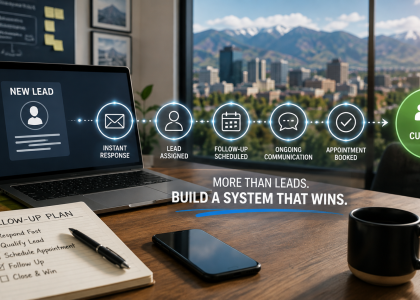
The companies that consistently grow aren’t winning because they work harder. They’re winning because they’ve built Boise business systems that create leverage, eliminate bottlenecks, and generate predictable outcomes.
At Legacy Engine™©, we believe businesses should operate like engines—not agencies, not departments, and certainly not collections of disconnected tools.
The businesses that scale successfully build systems that run whether the owner is present or not.
That’s where sustainable growth begins.
Why Most Businesses Hit a Growth Ceiling
Many entrepreneurs start by doing everything themselves.
Sales.
Marketing.
Operations.
Customer service.
Accounting.
At first, this works.
However, as demand increases, complexity follows.
Suddenly, every decision requires approval. Every process lives in someone’s head. Every mistake becomes expensive.
The business becomes dependent on people instead of systems.
Common symptoms include:
- Missed opportunities
- Inconsistent client experiences
- Team confusion
- Poor communication
- Slower execution
- Owner burnout
Growth should create freedom.
Without systems, it creates chaos.
Systemize Before You Scale
One of the biggest mistakes companies make is scaling before documenting.
More employees won’t fix broken workflows.
More software won’t solve unclear processes.
More marketing won’t repair operational bottlenecks.
Successful organizations understand a simple principle:
If it’s working, systemize it.
Before scaling, every repeatable process should have:
Defined Outcomes
Start with the end result.
What should happen every single time?
Standard Operating Procedures
Document every step required to achieve the outcome consistently.
Accountability Checkpoints
Determine who owns the process and how success is measured.
Continuous Improvement Loops
Review and optimize regularly.
The goal isn’t perfection.
The goal is repeatability.
The Power of Leverage
Every business decision should pass a simple filter:
Will this create leverage?
Leverage is what allows organizations to grow without increasing effort at the same rate.
Time Leverage
Automations eliminate repetitive work and free teams to focus on higher-value activities.
Examples include:
- Automated appointment reminders
- Lead nurturing sequences
- Client onboarding workflows
- Review generation campaigns
Revenue Leverage
Systems improve consistency.
Consistency improves conversions.
Conversions improve profitability.
Operational Leverage
Strong infrastructure allows businesses to handle increased demand without proportionally increasing overhead.
The result is a business that scales efficiently instead of becoming more complicated.
Build the Blueprint Before the Technology
Many businesses make the same costly mistake.
They buy software before creating a strategy.
Technology is not a strategy.
It’s an amplifier.
If your process is broken, automation simply helps you fail faster.
Before implementing any platform or tool, document:
Customer Journey
Map every interaction from first touch to long-term retention.
Decision Trees
Identify every possible path a customer can take.
Team Responsibilities
Clearly define ownership.
Success Metrics
Establish measurable outcomes before implementation.
Blueprints create clarity.
Clarity creates speed.
Speed creates growth.
Automation Without Accountability Is Dangerous
Automation is powerful.
However, automation without oversight creates new problems.
The best systems blend efficiency with accountability.
For example:
- Automated lead routing with sales notifications
- Automated onboarding with milestone checkpoints
- Automated reporting with performance reviews
- Automated follow-up sequences with human intervention triggers
Technology should support people.
Not replace critical thinking.
The most successful businesses use automation to remove friction while maintaining quality control.
Why Rankings Alone Don’t Matter
Many agencies sell rankings.
Some sell impressions.
Others sell traffic.
Unfortunately, none of those metrics guarantee revenue.
Businesses should focus on outcomes that impact growth.
Track metrics such as:
- Qualified leads
- Customer acquisition cost
- Sales opportunities
- Client retention
- Customer lifetime value
- Revenue generated
According to research from Harvard Business Review, organizations that prioritize operational effectiveness consistently outperform competitors over the long term.
Traffic is a metric.
Revenue is a result.
Never confuse the two.
Businesses Need Operating Systems, Not Marketing Campaigns
Marketing campaigns come and go.
Algorithms change.
Platforms evolve.
Systems endure.
A business operating system creates:
Predictable Growth
Processes create consistency regardless of market conditions.
Team Alignment
Everyone understands expectations and responsibilities.
Better Client Experiences
Customers receive consistent service every time.
Faster Decision Making
Documented systems eliminate uncertainty.
Increased Business Value
Companies with strong systems are more scalable and often more valuable.
Systems are assets.
Chaos is a liability.
Continuous Optimization Creates Competitive Advantages
The best businesses never stop improving.
Optimization should become part of company culture.
Ask these questions regularly:
- What broke?
- What improved?
- What created friction?
- What should be automated?
- What should be eliminated?
- What should be rebuilt entirely?
Small improvements compound over time.
A one-percent improvement made weekly creates massive gains over years.
Companies that embrace optimization stay ahead because they evolve faster than competitors.
The Legacy Engine Philosophy
Legacy Engine was built on a simple belief:
Humans burn out. Engines run 24/7.
Business owners shouldn’t be trapped inside their companies.
They should own systems that create freedom, scalability, and long-term value.
Whether you’re improving your Brand Strategy, strengthening your Content Marketing, or investing in Web Design, every initiative should support a larger operational framework.
Because growth without infrastructure eventually collapses.
Infrastructure without growth creates stagnation.
The right system creates both.
Ready to Build a Business Engine?
The most successful businesses aren’t built on hustle.
They’re built on systems.
If you’re ready to create scalable infrastructure, automate repetitive processes, and build a company that runs with precision, Contact Us today.
Legacy Engine helps Boise businesses transform operational chaos into scalable growth engines that produce measurable results year after year.
Because the future belongs to companies that build systems—not those that rely on memory, luck, or endless effort.
Frequently Asked Questions
What are business systems?
Business systems are documented processes, workflows, and automations designed to create consistent outcomes across an organization.
Why are business systems important?
They reduce operational friction, improve accountability, increase efficiency, and make growth more predictable.
When should a business start documenting processes?
As soon as a task becomes repeatable. Early documentation prevents future bottlenecks.
Can automation replace employees?
No. Automation removes repetitive tasks, allowing employees to focus on strategic work and customer relationships.
How do business systems improve profitability?
Systems improve efficiency, reduce mistakes, increase consistency, and create a better customer experience, which leads to higher profitability.