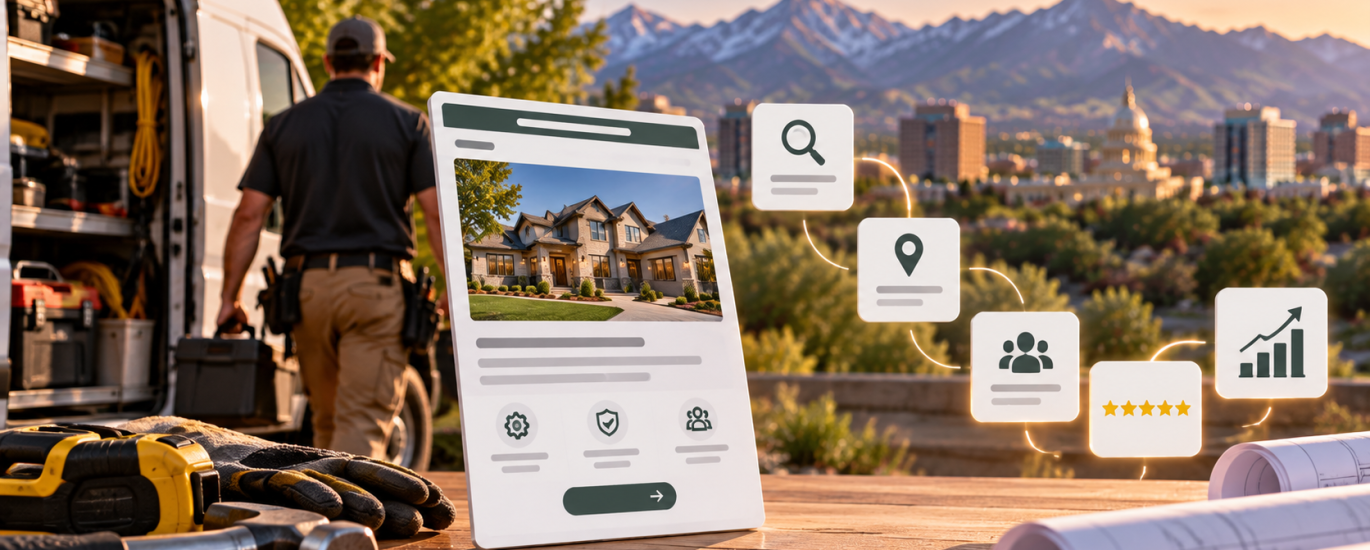
A service page has one important job: connect what customers are searching for with what your business actually provides.
However, many local websites treat service pages like digital brochures.
A few sentences. A list of services. A phone number.
Strong Boise Local SEO service pages should do much more. They should explain the service, address customer needs, establish local relevance, and create a clear path toward contacting your business.
A service page should help customers make a decision—not simply confirm that a service exists.
What Is a Local SEO Service Page?
A service page is a dedicated website page focused on a specific service your business provides.
For example, a Boise pest control company could have separate pages for:
- Residential pest control
- Ant control
- Rodent control
- Spider control
- Commercial pest control
A lawn care company might create dedicated pages for:
- Lawn maintenance
- Fertilization
- Weed control
- Aeration
- Seasonal cleanup
Each page gives the business room to explain a particular solution.
More importantly, each page can address the search intent surrounding that service.
Why One General Services Page Can Be Limiting
Imagine a company offers ten different services.
Its website puts all ten on one page.
Each service receives two sentences.
Customers looking for a specific solution now have very little information to evaluate.
In addition, the website has limited space to explain:
- The customer’s problem
- How the service works
- Who needs it
- Important considerations
- Common questions
- Relevant service areas
- The next step
Dedicated pages can create deeper, more useful experiences when individual services justify them.
Boise Local SEO Service Pages Should Match Search Intent
Someone searching for a specific service usually has a specific need.
Consider the difference between:
“How do I prevent weeds?”
and:
“weed control service Boise”
The first search is informational.
The second demonstrates stronger commercial intent.
Your service page should serve visitors who are evaluating an actual solution.
That means answering practical questions quickly.
What do you offer?
Where do you offer it?
Who is it for?
What happens next?
Good Local SEO starts with satisfying the customer’s actual intent.
Give Every Important Service a Clear Purpose
Not every variation deserves a separate page.
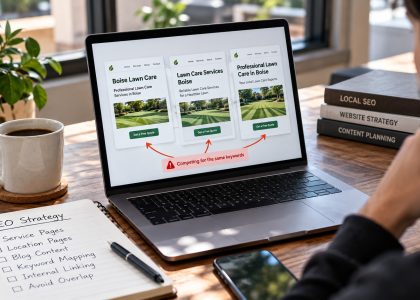
Creating dozens of nearly identical pages can produce unnecessary overlap.
Instead, identify your meaningful service categories.
Ask:
- Is this a distinct service?
- Does it solve a specific customer problem?
- Would customers search for it independently?
- Can we provide genuinely useful information about it?
- Does it contribute meaningfully to the business?
If the answers are mostly yes, a dedicated page may make sense.
Explain the Problem Before Selling the Solution
Customers don’t always think in industry terminology.
They think about problems.
A dog owner may think:
“My dog won’t listen when people come over.”
A lawn care customer might think:
“Why is my grass turning brown?”
A homeowner could think:
“Why do ants keep coming back?”
Your service content should bridge the gap between those problems and your solution.
Explain what customers are experiencing.
Then show how the service addresses it.
This creates a more natural path toward conversion.
Make Local Relevance Useful
Adding “Boise” twenty times doesn’t make a service page locally useful.
Local relevance should come from meaningful context.
Depending on the business, that might include:
- Areas legitimately served
- Local operating conditions
- Seasonal considerations
- Service availability
- Relevant customer expectations
- Geographic limitations
The goal is to help Boise-area customers understand whether your service fits their needs.
Local relevance should provide context, not keyword decoration.
Connect Core Services With Service + City Pages
For businesses covering multiple communities, core service pages and local landing pages can work together.
Imagine a company provides pool service throughout the Treasure Valley.
Its website might include a core:
Pool Service
page alongside legitimate location-focused pages for communities it serves.
This creates a structure such as:
Core Service → Service + Boise → Service + Meridian → Service + Eagle
However, each local page should offer genuine value.
Simply duplicating the same service page and replacing the city name creates a weak customer experience.
Legacy Engine’s Local Landing Page Framework is built around intentional Service + City coverage.
Use FAQs to Address Conversion Friction
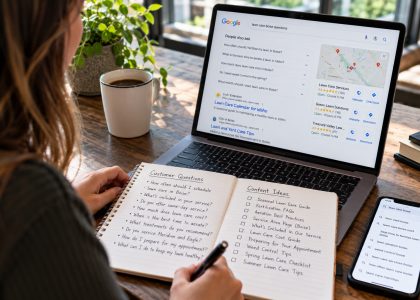
Customers often hesitate because they still have unanswered questions.
Service-page FAQs can address those concerns.
Useful questions may cover:
- Service process
- Scheduling
- Preparation
- Service areas
- What customers should expect
- Whether a particular situation is covered
Choose questions based on actual customer needs.
Don’t add FAQs merely to make the page longer.
Every section should have a reason to exist.
Show Customers the Next Step
A service page can rank and still perform poorly as a business asset.
Why?
Because visibility isn’t the same as conversion.
After understanding the service, visitors need a clear next step.
Depending on the company, that could be:
- Request an estimate
- Schedule a consultation
- Call the business
- Submit a service request
- Ask a question
Avoid making visitors search the website to figure out how to proceed.
The path from service interest to action should be obvious.
Support Service Pages With SEO Content
A service page doesn’t need to answer every possible question.
That’s where supporting content becomes useful.
For example:
Core Service: Lawn fertilization
Supporting articles could address:
- Signs a lawn needs fertilization
- Seasonal fertilization considerations
- Common lawn nutrient problems
- Fertilization preparation questions
Those articles can educate customers while naturally connecting them to the relevant service.
This is where Content Marketing can support the commercial side of your website.
Strengthen Service Pages With Internal Links
Internal links help connect related website assets.
A relevant blog article can point toward a service page.
A location page can connect customers with the appropriate service.
A service page can direct visitors toward supporting resources.
The structure might look like:
Educational Content → Service Page → Local Landing Page → Contact
Not every visitor will follow exactly that path.
However, the website should provide logical routes toward conversion.
Keep Service Pages Current
Services change.
Businesses expand.
Processes improve.
Customer questions evolve.
Yet service pages are often published and forgotten.
Periodically review important pages for:
- Outdated service information
- Weak calls to action
- Missing FAQs
- Broken links
- Old service areas
- Thin explanations
- Better internal-link opportunities
- Changes in customer search behavior
Existing service pages can be valuable assets.
Maintain them accordingly.
Avoid Turning Every Keyword Into a Service Page
Keyword research can reveal dozens of related phrases.
That doesn’t mean every phrase deserves a URL.
For example, several keywords may represent essentially the same customer intent.
Creating separate pages for every slight wording variation can make the website repetitive.
Instead, organize closely related searches around the most appropriate page.
One comprehensive page can often address several variations naturally.
Measure Service Pages by Business Outcomes
Rankings provide useful information.
However, they aren’t the final objective.
Evaluate whether service pages help produce meaningful customer activity.
Depending on your tracking setup, examine:
- Organic entrances
- Calls
- Form submissions
- Quote requests
- Contact-page visits
- Engagement with important CTAs
- Qualified leads
A page ranking for dozens of keywords isn’t necessarily valuable if none of those visitors become customers.
The strongest SEO pages connect search visibility to business opportunity.
How Legacy Engine Builds Local Search Coverage
Legacy Engine’s Local SEO system includes a Local Landing Page Framework designed around Service + City pages.
That framework works alongside:
- Google Business Profile Optimization
- Link Building & Citations
- Weekly SEO Content Publishing
Together, these components create multiple ways for customers to discover a service business through local search.
Learn more About Legacy Engine and its approach to Local SEO for service-based businesses.
Turn Service Pages Into Customer Acquisition Assets
Your service pages shouldn’t simply fill navigation menus.
Give important services dedicated space.
Address real customer problems.
Provide meaningful Boise context.
Connect relevant supporting content.
Make the next action clear.
Then measure whether those pages contribute to actual leads.
That’s how a service page becomes part of a Local SEO growth system.
Ready to strengthen your service pages and local search presence? Contact Us to connect with Legacy Engine.
Frequently Asked Questions
What should a Boise Local SEO service page include?
A useful service page should clearly explain the service, customer problem, process, relevant local context, common questions, and next step.
Does every service need its own website page?
No. Dedicated pages are most useful when a service is meaningfully distinct and deserves enough unique information to help customers.
What’s the difference between a service page and a local landing page?
A service page primarily explains a specific offering. A local landing page connects a relevant service with a particular geographic market.
Should I create separate pages for similar keywords?
Not automatically. Closely related keywords with the same search intent can often be addressed by one strong page instead of several repetitive pages.
Can blog content help service pages?
Yes. Relevant educational articles can answer deeper customer questions and internally link visitors toward appropriate service pages.