Publishing strong service pages and blogs is only part of building a successful website.
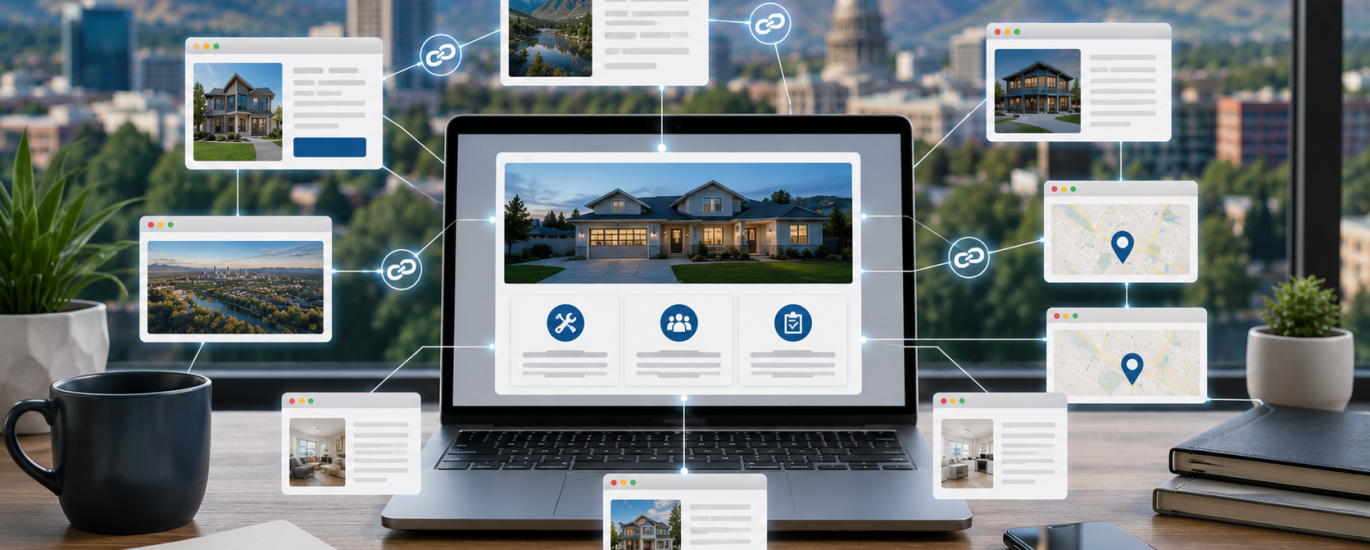
A Boise internal linking strategy connects those pages so customers and search engines can better understand your website. Strategic links can guide visitors toward relevant services while strengthening the structure supporting your Local SEO efforts.
For service businesses, internal linking turns individual pages into a connected search ecosystem.
What Is Internal Linking?
An internal link connects one page of your website to another page on the same website.
For example, a blog about local search could link to:
- A related service page
- A location page
- Another educational article
- A contact page
- A relevant resource
These connections help visitors discover useful information without searching through your entire website.
Why Internal Links Matter for Local SEO
Your website may contain excellent content. However, important pages can become isolated if nothing links to them.
Internal links help create relationships between your content.
They can support:
- Website navigation
- Content discovery
- Search engine crawling
- Page hierarchy
- Topic organization
- Customer journeys
A strong website isn’t just a collection of pages. It’s a connected system.
Boise Internal Linking Strategy Starts With Your Services
Your most important services should be easy to discover.
Relevant blog articles can naturally direct readers toward those services.
For example, a roofing company might connect an article about storm damage to its roof repair service page.
A landscaping company could link seasonal lawn-care content to its maintenance services.
The link should help the reader take a logical next step.
Connect Blogs to Local Landing Pages
Internal linking becomes especially valuable for businesses serving several locations.
Imagine a service company operating across:
- Boise
- Meridian
- Eagle
- Nampa
- Kuna
Relevant articles can link to appropriate location pages when the connection genuinely helps the reader.
Likewise, location pages can direct customers toward the specific services available in that market.
This creates stronger relationships between service, location, and educational content.
Use Descriptive Anchor Text
Anchor text is the clickable wording used for a link.
Instead of vague phrases such as:
Click here
use wording that describes the destination.
Examples include:
- Local SEO services
- Boise service area pages
- Google Business Profile optimization
- Local search strategy
Descriptive anchor text gives readers clearer expectations before clicking.
Don’t Overload Every Page With Links
More links aren’t automatically better.
Internal links should serve a purpose.
Avoid:
- Linking every keyword
- Repeating the same link excessively
- Adding unrelated links
- Forcing links into sentences
- Creating distracting blocks of links
Prioritize relevance and usability.
Find and Fix Orphan Pages
An orphan page has few or no internal links pointing toward it.
That can make valuable content harder for both visitors and search engines to discover.
Common orphan pages include:
- Older blog posts
- New service pages
- Local landing pages
- Resources
- Campaign pages
Regular website reviews can uncover these pages and identify opportunities to connect them with relevant content.
Use New Content to Strengthen Existing Pages
Every new article creates another internal linking opportunity.
When publishing content, ask:
- Which service does this article support?
- Is there a related location page?
- Which older article provides additional context?
- Where should the customer go next?
You can also revisit older articles and link them to newly published resources.
This keeps your content ecosystem connected as the website grows.
Internal Links Should Support Conversions Too
SEO isn’t the only goal.
Internal links can help potential customers move through the buying journey.
A reader might follow this path:
Blog article → Service page → Location page → Contact page
Each link reduces the effort required to find the next piece of information.
That can create a smoother path from search visibility to qualified lead.
How Legacy Engine Builds Connected Local SEO Systems
Legacy Engine approaches Local SEO as an interconnected system.
Internal linking can connect the assets created through that strategy, including:
- SEO content
- Local landing pages
- Service pages
- Google Business Profile-related resources
- Website conversion pages
Combined with citations, link building, Google Business Profile optimization, and ongoing content, a well-structured website creates a stronger foundation for local visibility.
Learn more about Legacy Engine™© and how its Local SEO system helps service businesses build sustainable search visibility.
Turn Your Website Into a Connected Growth Asset
Every page on your website should have a purpose.
More importantly, your important pages shouldn’t exist in isolation.
Strategic internal linking connects your content, helps visitors navigate your website, and creates clearer pathways toward your services.
If your website has grown without a clear linking structure, now is a good time to review it.
Ready to build a more connected Local SEO presence? Contact Us to learn how Legacy Engine can help.
Frequently Asked Questions
What is an internal link?
An internal link connects one page of a website to another page on the same website.
Can internal linking help Local SEO?
Internal links can support Local SEO by improving website organization, content discovery, and connections between service, location, and educational pages.
What pages should local businesses link to?
Prioritize relevant service pages, location pages, helpful articles, and conversion pages based on what will benefit the visitor.
What is an orphan page?
An orphan page is a webpage with few or no internal links pointing to it, making it harder to discover through the site’s normal structure.
Should every blog include internal links?
Relevant internal links are useful when they genuinely help readers discover related information or take the next step.