
Most businesses treat blogging like a content chore.
That is the problem.
Blog SEO Boise strategy is not about publishing random articles every week. It is about building a content engine that compounds traffic, trust, and revenue over time.
At Legacy Engine, we believe rankings without conversions are vanity metrics. Your blog should function like infrastructure — attracting qualified traffic, educating buyers, and supporting long-term growth.
If a human has to remember every content task manually, the system is already broken.
Why Most Business Blogs Fail
Most blogs fail because they are built without strategy.
Businesses publish content with:
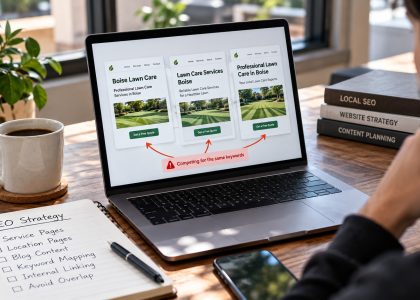
- No keyword structure
- No search intent mapping
- No internal linking
- No conversion path
- No authority positioning
- No optimization process
The result?
Traffic that never converts.
Or worse.
No traffic at all.
Before writing a single article, you need a system.
That starts with understanding search intent.
Search Intent Comes Before Keywords
Most SEO advice starts with keywords.
We start with behavior.
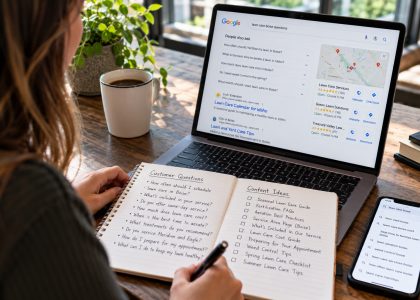
Every search query represents a problem, goal, or friction point.
For example, someone searching:
- “how to optimize blog posts”
- “SEO content strategy Boise”
- “why my blog is not ranking”
…is looking for a solution.
Your content must become the best answer available.
Then you layer keywords naturally.
High-Value Local Keywords for Boise Businesses
Examples include:
- blog SEO Boise
- Boise content marketing
- Boise SEO strategy
- local SEO content
- website content optimization Boise
- SEO blog writing Boise
However, stuffing keywords destroys readability.
Google rewards useful content, not robotic repetition.
Build Topical Authority Instead of Random Posts
One article will not make your website authoritative.
A content ecosystem will.
Topical authority happens when your website covers an entire subject deeply.
Instead of writing disconnected blog posts, build clusters.
For example:
SEO Content Cluster Example
Core Topic:
- Blog SEO Boise
Supporting Topics:
- Local keyword research
- Internal linking strategy
- Technical SEO audits
- Conversion copywriting
- Content optimization checklists
- Website speed optimization
- AI-assisted content workflows
This creates semantic relevance.
It also helps search engines understand your expertise.
That is where Content Marketing becomes strategic infrastructure instead of random publishing.
Your Blog Structure Matters More Than You Think
Google evaluates user experience signals.
If your content feels cluttered, confusing, or hard to scan, users bounce.
That hurts rankings.
Structure Every Blog for Readability
Use:
- Clear H1, H2, and H3 headings
- Short paragraphs
- Bullet points
- Bolded key takeaways
- Mobile-friendly formatting
- Short sentences
- Strong transitions
In addition, make sure your design supports readability.
Fast loading speeds and clean layouts increase engagement.
This is why strong Web Design directly impacts SEO performance.
Internal Linking Builds SEO Momentum
Internal links help:
- Search engines crawl your site
- Users discover related content
- Authority flow across pages
- Conversion paths become clearer
However, links should feel natural.
Never force them.
If your article discusses positioning, connect it to Brand Strategy.
If it discusses lead generation, connect it to relevant service pages.
Every link should reduce friction.
Technical SEO Still Wins Quietly
Most businesses ignore technical SEO because it is not flashy.
That is a mistake.
Technical optimization creates the foundation rankings depend on.
Blog SEO Technical Checklist
Before publishing any article, verify:
- Meta title optimization
- Meta description clarity
- SEO-friendly URLs
- Proper heading hierarchy
- Image compression
- Image alt text
- Mobile responsiveness
- Internal links
- External authority links
- Schema markup
- Page speed
- Broken link checks
According to Google Search Central, helpful content should prioritize users first while maintaining strong technical accessibility.
SEO is not creativity versus structure.
It requires both.
Fresh Content Performs Better
Old content decays.
Search behavior changes.
Competitors update their pages.
Google evolves constantly.
If your content remains untouched for years, rankings usually decline.
Content Refresh Strategy
Every quarter:
- Update outdated stats
- Improve headlines
- Add new FAQs
- Expand weak sections
- Improve internal linking
- Refresh CTAs
- Optimize metadata
- Add local relevance
This follows the Legacy Engine optimization loop:
Observe friction → Simplify → Optimize → Automate → Scale
Systems that improve continuously outperform businesses relying on random effort.
Conversion Optimization Is the Missing Piece
Many blogs generate traffic but fail to create revenue.
That happens when content lacks:
- Clear calls to action
- Trust signals
- Service alignment
- Strategic positioning
- Lead capture systems
SEO should support business growth.
Not vanity metrics.
A high-ranking article with no conversion path is incomplete infrastructure.
What Makes Legacy Engine Different
Legacy Engine™© is not built like a traditional agency.
We build systems.
Every article, framework, workflow, and automation is designed for leverage.
We optimize for:
- Scalability
- Search visibility
- Conversion efficiency
- Operational simplicity
- Long-term authority
Because rankings mean nothing without revenue.
And content means nothing without a system behind it.
Final Thoughts
The future of SEO belongs to businesses that operate with precision.
Not noise.
If your current blog strategy feels inconsistent, bloated, or disconnected from growth, the problem is usually not effort.
It is architecture.
Strong SEO content compounds.
Weak content creates maintenance.
Legacy Engine helps Boise businesses build systems that rank, convert, and scale.
Ready to build a smarter content engine? Contact Us.
FAQs
What is blog SEO?
Blog SEO is the process of optimizing blog content to improve visibility in search engines and attract qualified traffic.
Why is blog SEO important for Boise businesses?
It helps local businesses appear when customers search for services, solutions, and expertise online.
How often should blog content be updated?
High-performing content should be reviewed quarterly to maintain rankings and accuracy.
What is topical authority in SEO?
Topical authority happens when a website covers a subject deeply through interconnected content.
Does web design affect SEO?
Yes. Website speed, mobile usability, layout clarity, and user experience all influence rankings and engagement.