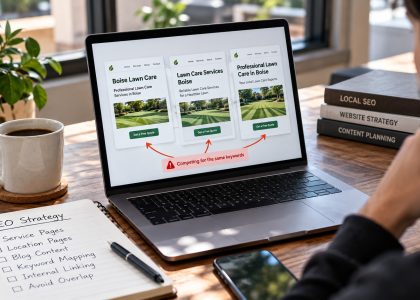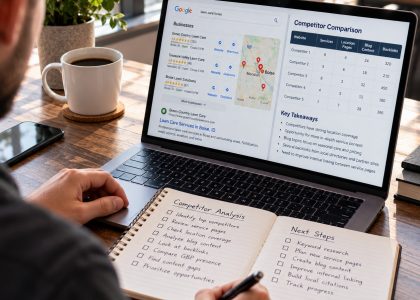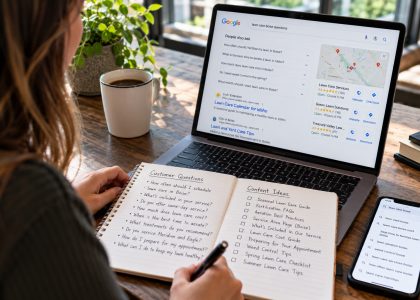

When Boise business owners tackle website content, Boise website heading optimization should be front and center. Clear, strategic headings and subheadings not only guide readers but also help search engines understand your page. Good heading structure strengthens both readability and SEO.
Why Heading Structure Matters
In today’s fast‑paced world, attention spans are short. Headings and subheadings act like signposts — they help visitors scan pages quickly and find what they need. Research by the Nielsen Norman Group found 79 % of users scan rather than read word‑for‑word.
From an SEO perspective, tags like H1 and H2 tell search engines the main topics and subsections of your page.
Moreover, heading organization improves accessibility—screen readers rely on proper heading tags to help visually impaired users navigate content.
Enhancing User Experience With Headings
User experience (UX) is now a critical part of SEO. Well‑crafted headings can:
- Break up large blocks of text so your content is less intimidating.
- Make it easy for readers to find exactly what they’re looking for (especially on mobile).
- Highlight key points and generate curiosity, encouraging deeper reading.
- Reduce bounce rate and increase time on page — positive signals for search engines.
With mobile traffic dominating, headings that scale well on small screens become even more important.
How to Optimize Headings for SEO and Readability
To get the most from your heading strategy, follow these best practices:
- Use your primary keyword in the H1 tag (for example: Boise website heading optimization).
- Include secondary keywords or related terms in H2/H3 tags to add depth.
- Keep headings concise (generally under 60 characters) and descriptive.
- Maintain a logical hierarchy (H1 → H2 → H3). Skip levels and you risk user confusion and crawler misunderstanding.
- Avoid keyword stuffing. Focus on natural language that serves users first, search engines second.
- Incorporate semantic SEO: include related concepts and naturally‑phrased questions in headings to align with user intent and voice search trends.
Technical & Mobile Considerations
From a technical standpoint:
- Use one H1 per page (typically the page’s main title). Multiple H1s can confuse search engines about page focus.
- Use proper HTML heading tags (H1–H6) in a meaningful structure.
- On mobile devices: ensure heading font sizes are readable, line lengths are appropriate, spacing is sufficient, and the design is responsive.
Measuring and Refining Heading Performance
While you can’t isolate heading tags in most analytics tools, you can infer their impact through broader metrics:
- Click‑through rate (CTR) from search results
- Time on page and bounce rate
- Scroll depth (how far users go)
- Keyword rankings for phrases used in headings
- Appearances in featured snippets
Consider A/B testing different heading versions (e.g., “10 Tips to Boost Your Website SEO” vs “How to Improve Your Website’s SEO in 10 Steps”) and track which resonates most with your Boise audience. Recurring review and updates are key — SEO evolves and so should your heading strategy.
Why Boise Businesses Should Care
For local businesses here in Boise, standing out in search results and providing a strong user experience is non‑negotiable. By optimizing your headings:
- You ensure your message comes across clearly to local visitors browsing on mobile devices.
- You align with modern SEO mechanics, giving you a competitive edge.
- You enhance readability and accessibility — which builds trust with visitors and improves conversion potential.
If you’ve invested in a new website via Web Design, or are refining your brand through Brand Strategy and Content Marketing, don’t forget that heading structure is a foundational piece.
Final Thoughts
Heading tags might seem like a small part of your website, but they’re a critical component of Boise website heading optimization. They bridge the gap between human readers and search engine crawlers, enhance usability, improve accessibility, and support your SEO strategy.
Start with a clear, keyword‑rich H1. Build logical H2/H3 sections. Keep it natural and user‑focused. Then measure, refine, and repeat. A strong heading structure can be the difference between getting lost in search results and being found by the right local audience.
Ready to build a smarter website? Contact Us today to make every word — and every heading — count.
FAQs
Q: How many heading levels should I use on a page?
A: The HTML spec allows H1–H6, but most pages only need H1 for the main title plus H2 and H3 for sections/subsections. Using up to H4 or lower is rarely necessary.
Q: Should I include keywords in all of my headings?
A: While including relevant keywords helps, the focus should be on clarity and value for users. Avoid stuffing keywords—write headings that people naturally understand and find useful.
Q: Can I have multiple H1 tags on a single page?
A: Technically yes, but it’s not recommended. One H1 helps define the central topic of the page. Multiple H1s may confuse search engines and dilute focus.
Q: Does heading length matter?
A: There’s no hard character limit, but keeping headings concise (under ~60 characters) helps readability and display, especially on mobile.
Q: Will headings alone improve my search ranking?
A: Not by themselves. Headings help signal structure and relevance, but they work best alongside quality content, user experience, accessibility, and other SEO best practices.